

















Precision Displays for Demanding Industrial Instrumentation Applications
Small TFTs, Smart UART, bar-type, OLED and touchscreen solutions
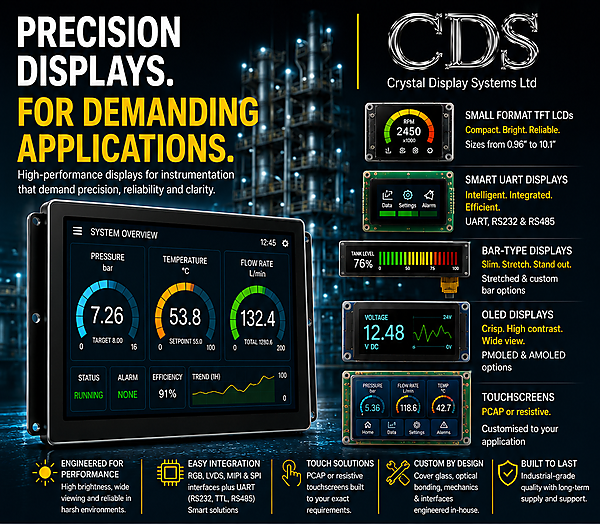
Industrial instrumentation depends on clear, reliable and responsive display technology. Whether a product needs a compact embedded TFT, a touchscreen HMI, a stretched bar display or a high-contrast OLED, choosing the right display can have a significant impact on usability, integration and long-term product performance.
At Crystal Display Systems, we provide industrial instrumentation displays designed for demanding environments and applications. From compact TFT LCDs starting at just 0.96 inches to Smart UART solutions, bar-type displays, OLEDs and customised touchscreens, we help customers optimise the display around the requirements of their application.
Display Technology for Modern Instrumentation
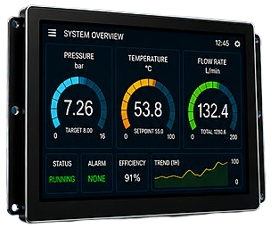
Instrumentation equipment is expected to present increasingly complex information clearly and accurately. Operators may need to monitor pressure, temperature, flow, voltage, speed, tank level, alarms, system status and trend information from a single interface.
The display therefore needs to do more than simply show data. It must provide:
- Clear visibility
- Reliable operation
- Suitable viewing angles
- Appropriate brightness
- Responsive touch operation where required
- Straightforward electronic integration
- Mechanical compatibility with the finished product
- Long-term availability and support
Our range of display technologies allows engineers to select a solution suited to the physical, electrical and environmental requirements of their instrumentation design.
Small Format TFT LCDs
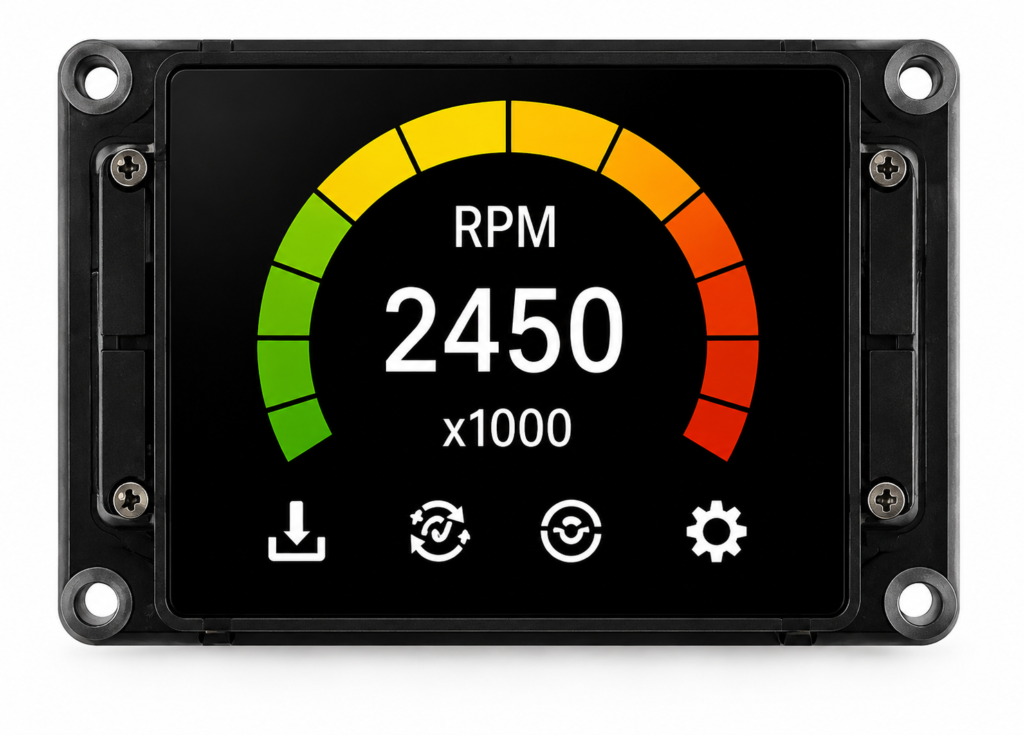
Compact instrumentation often requires a display that delivers strong visual performance without taking up unnecessary space.
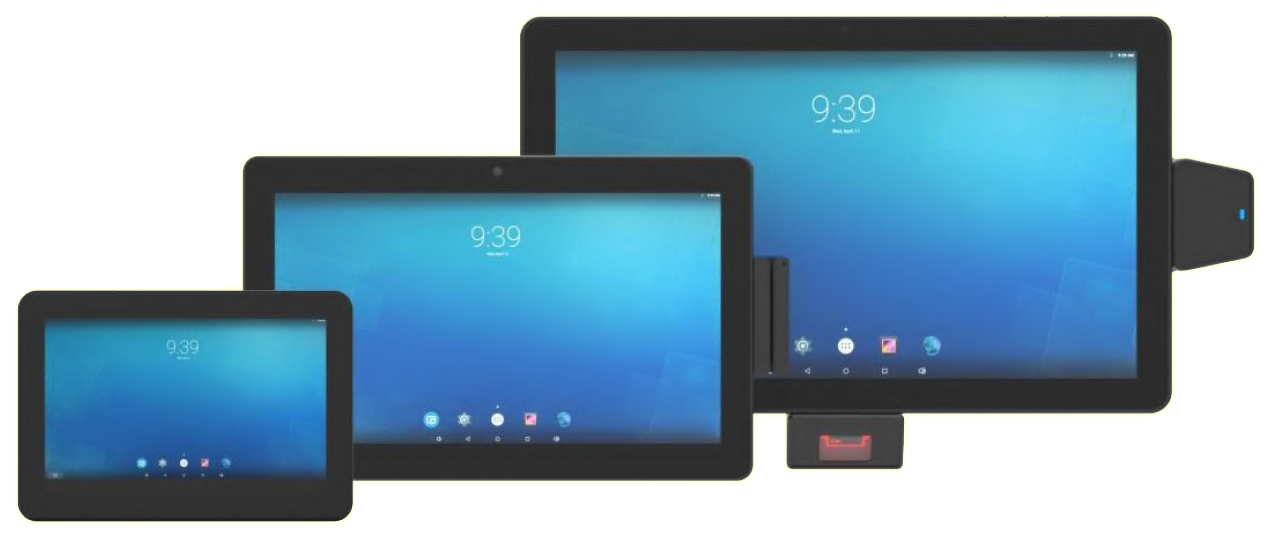
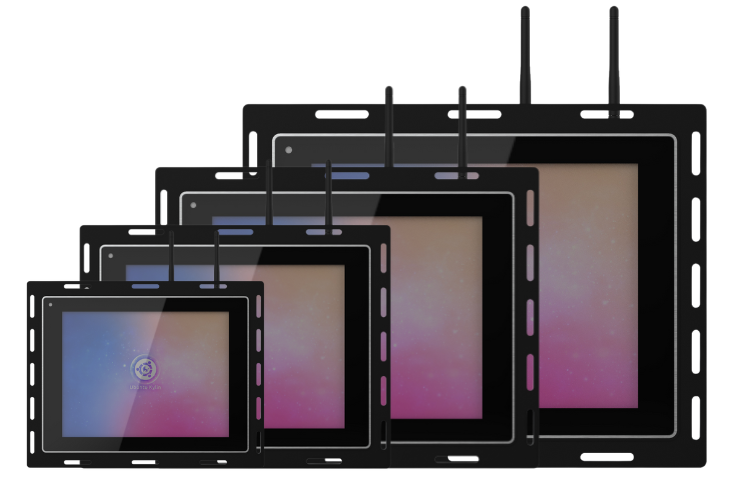
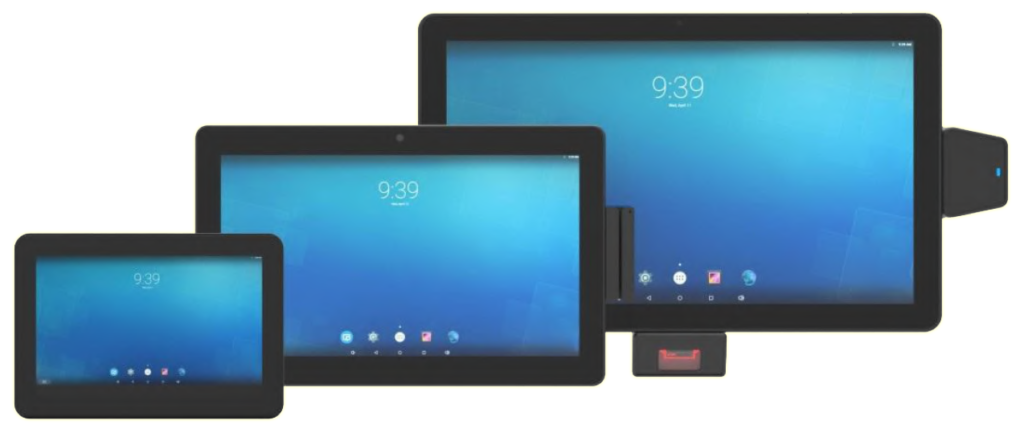
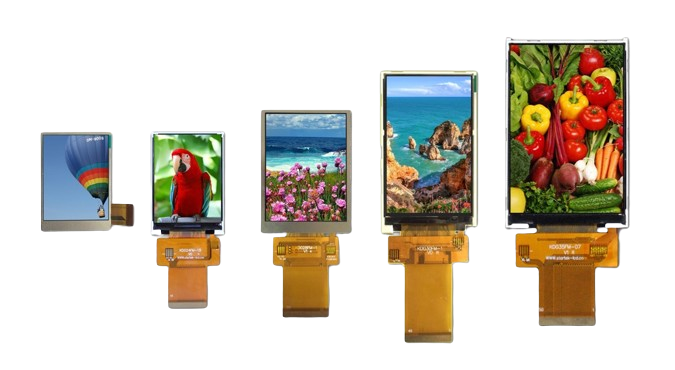
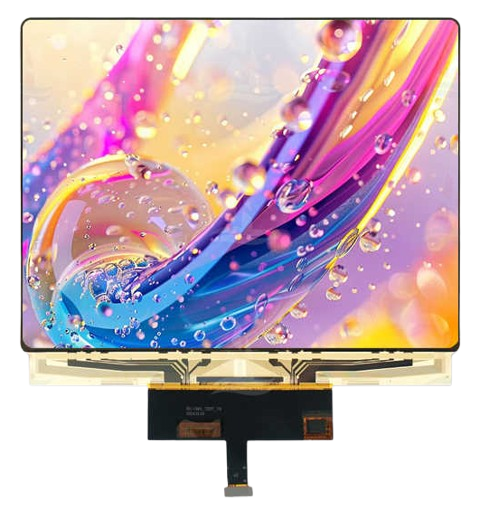
Our small format TFT LCDs are available from 0.96 inches through to 10.1 inches, providing flexible options for embedded instrumentation, controllers, handheld equipment, monitoring systems and compact HMIs.
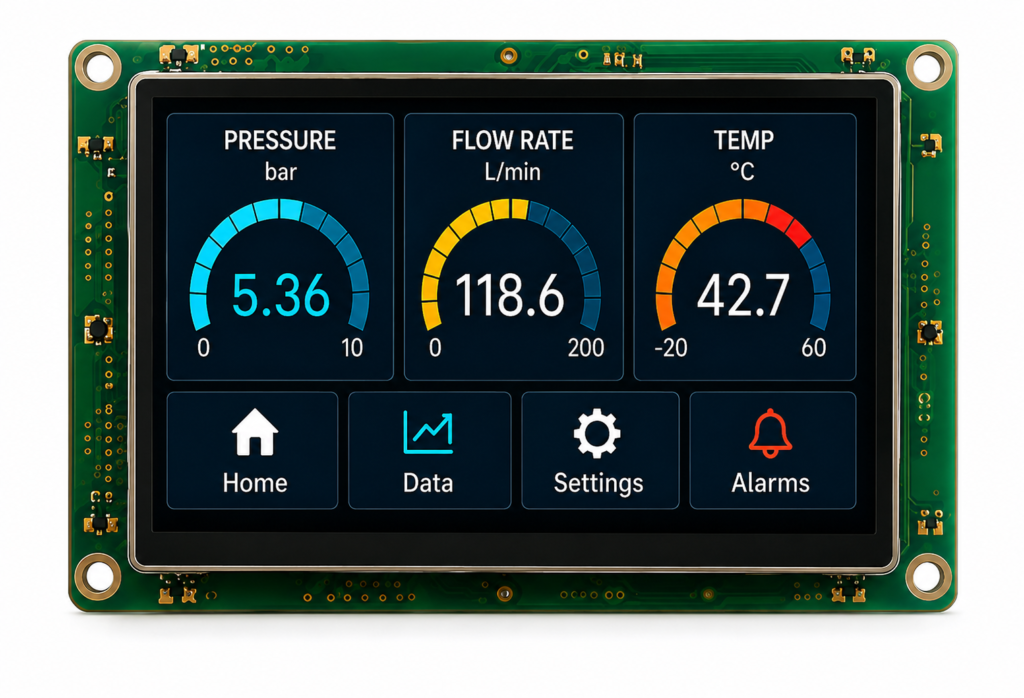
Small TFT displays can be ideal where engineers need to present graphical information such as gauges, status indicators, menus, alarms and measured values while keeping the overall product footprint compact.
Depending on the application, interface options can include RGB, LVDS, MIPI and SPI.
Smart UART Displays for Faster HMI Development
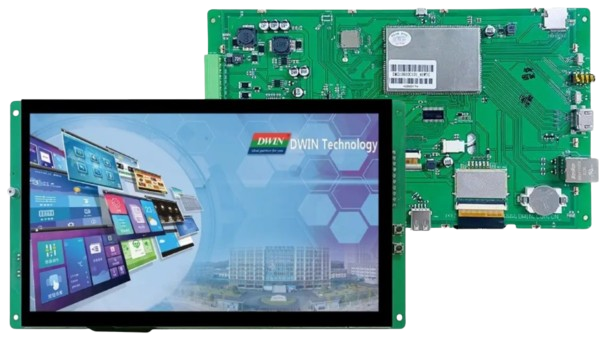
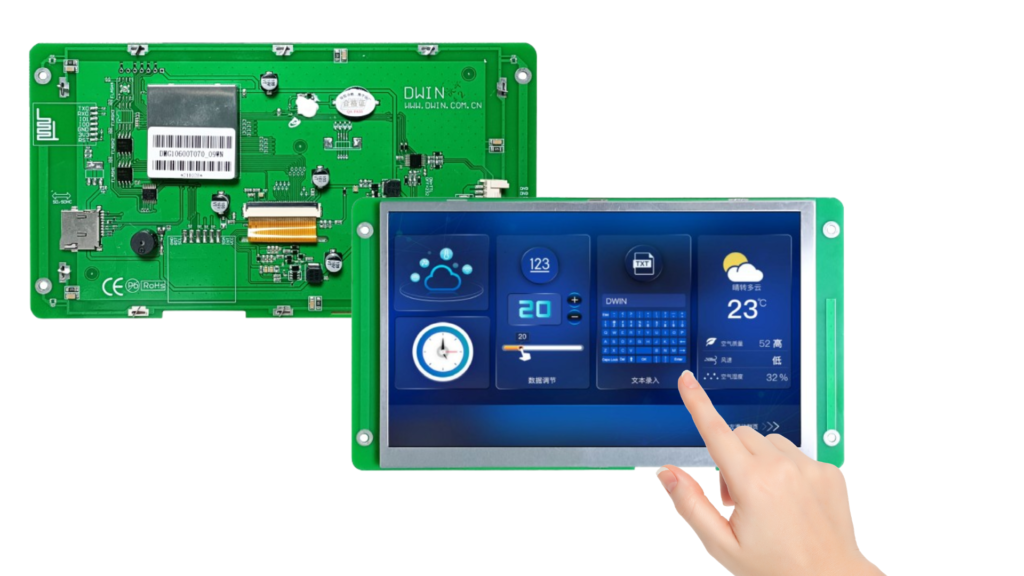
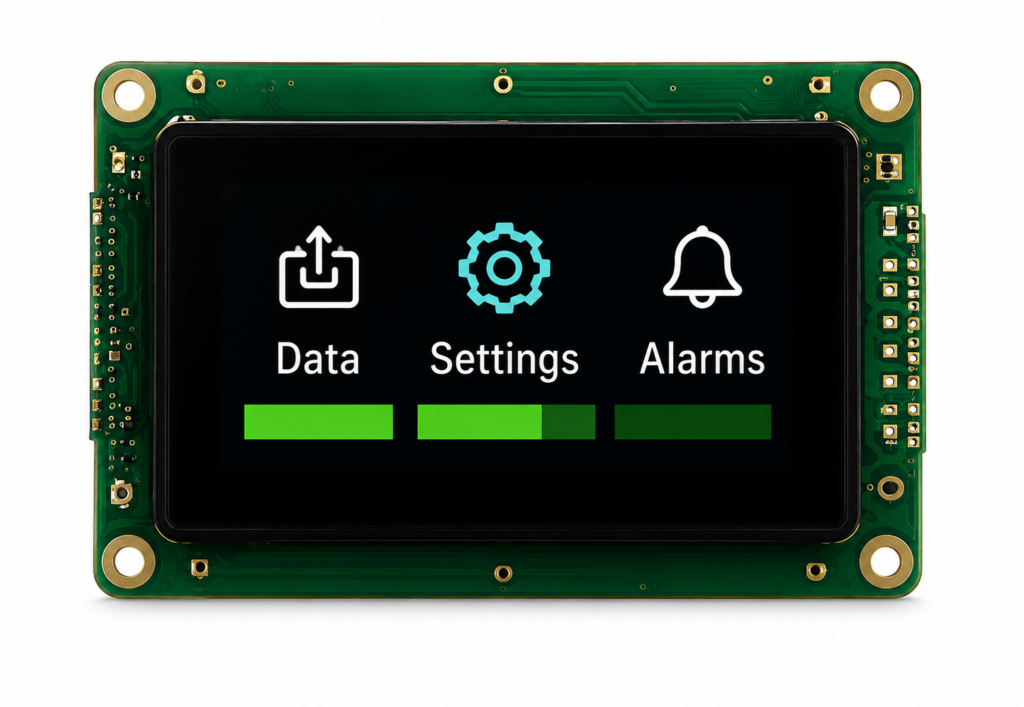
For applications that require a more integrated HMI solution, Smart UART displays can help simplify development.
These intelligent displays combine the LCD with processing and user-interface capabilities, reducing the amount of work that needs to be handled by the host electronics.
Connectivity options can include:
- UART
- RS232
- TTL
- RS485
Smart display platforms can be particularly useful for instrumentation applications requiring menus, data displays, alarms, settings screens, gauges and touch-controlled interfaces.
By moving more of the graphical interface functionality onto the display itself, engineers can potentially simplify communication between the display and the main controller.
Bar-Type Displays for Space-Constrained Instrumentation
Not every instrumentation product is suited to a conventional 4:3 or widescreen display.
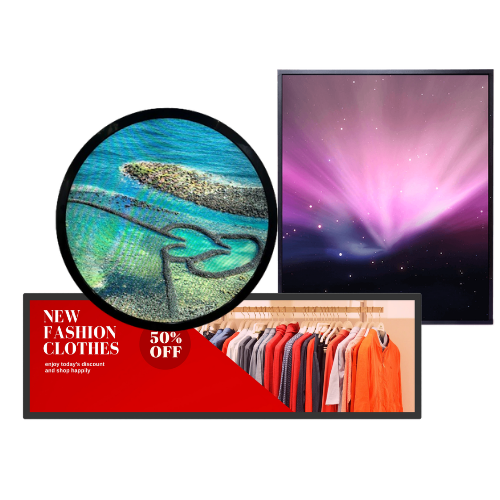
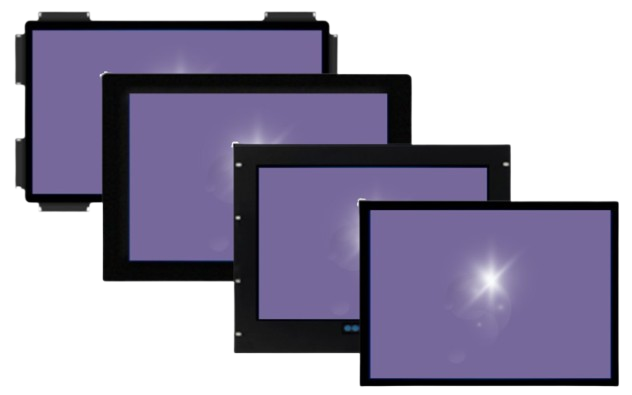
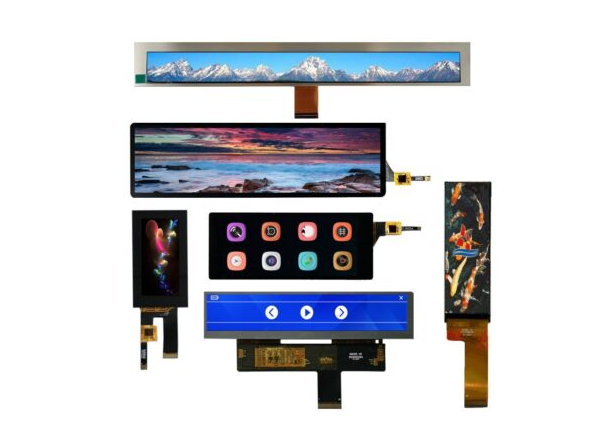
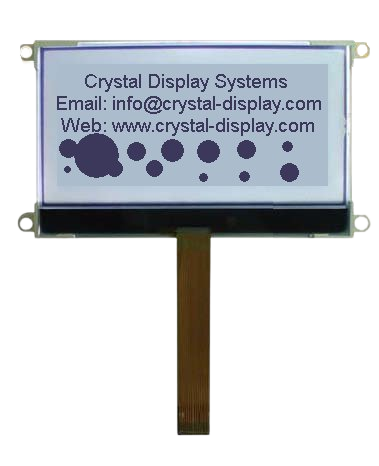
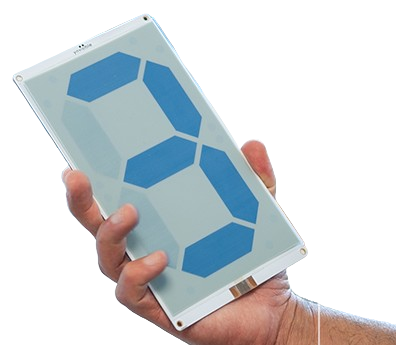
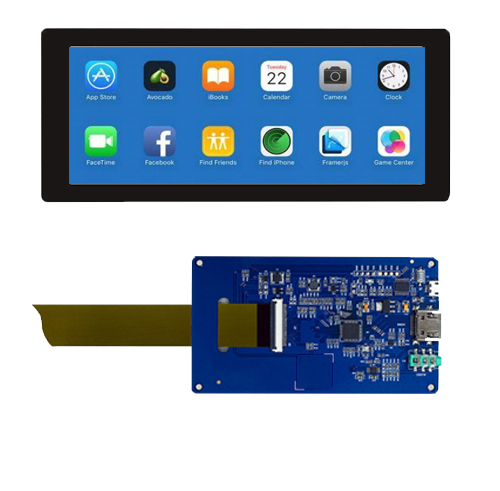
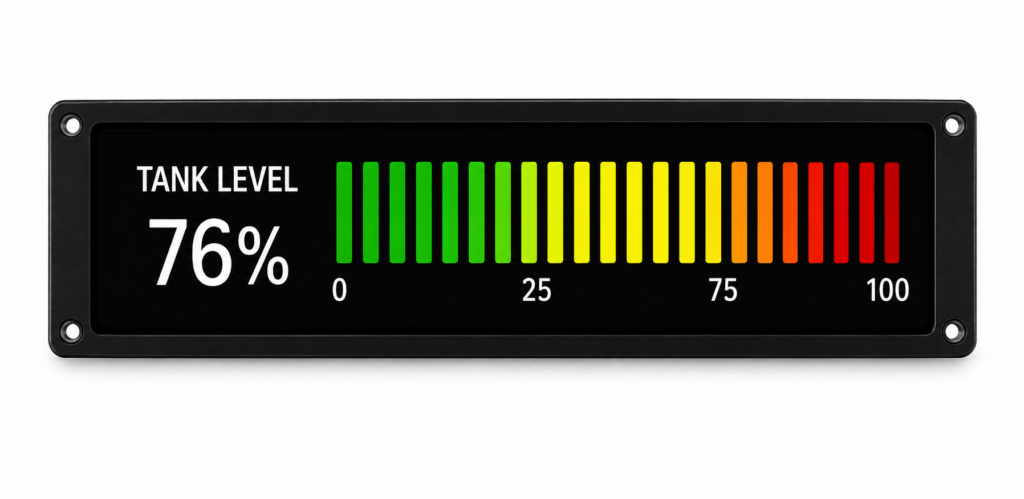
Bar-type and stretched displays provide a useful alternative for products where width is available but vertical space is limited.
Typical uses can include:
- Tank level indicators
- Process status displays
- Metering systems
- Control panels
- Equipment status bars
- Graphical indicators
- Compact machine interfaces
A stretched display can present information such as numerical readings, colour-coded status bars, warning zones and graphical data in a format that works naturally with the mechanical design of the equipment.
For engineers developing unusually shaped instrumentation products, bar-type displays can provide significantly greater design flexibility
OLED Displays for High Contrast and Excellent Visibility
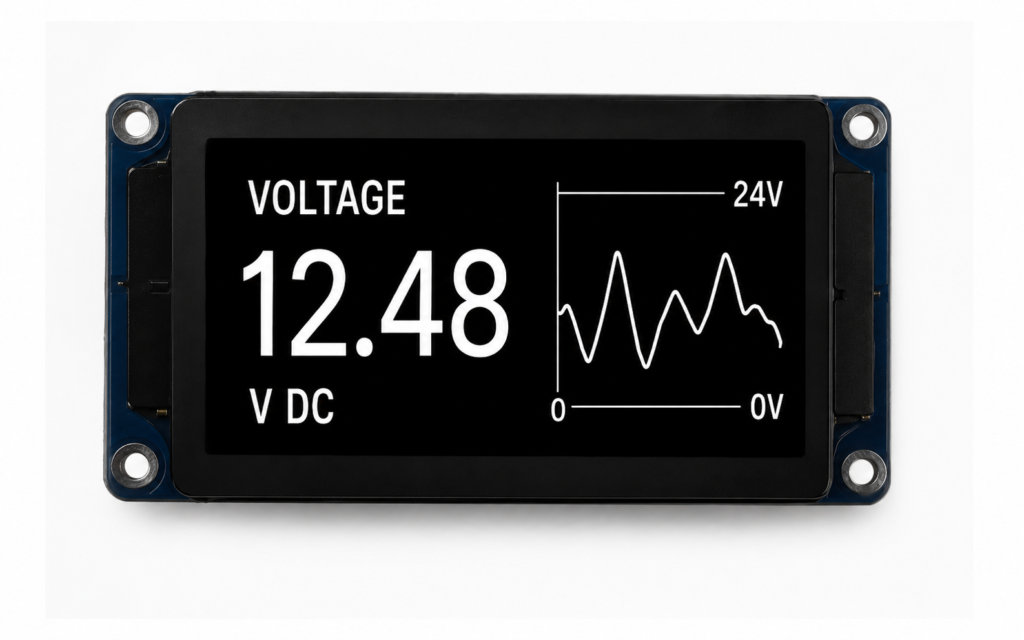
OLED technology is well suited to instrumentation applications where excellent contrast and strong visual clarity are important.
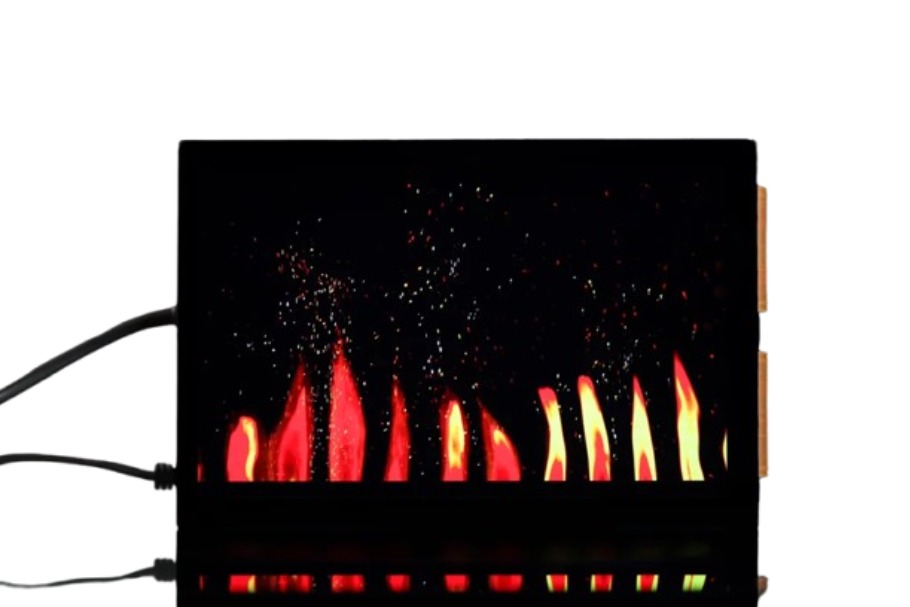
CDS can offer both PMOLED and AMOLED display technologies, giving engineers options for everything from compact monochrome-style interfaces through to high-quality full-colour graphical displays.
OLED displays can be particularly attractive for applications requiring:
- High contrast
- Crisp graphics
- Wide viewing performance
- Compact dimensions
- Clear numerical information
- Strong visual impact
An OLED display can be particularly effective for voltage, current, temperature and status readouts where information needs to remain clear and easy to interpret.
PCAP and Resistive Touchscreens
Touch functionality can transform an instrumentation display into a complete user interface.
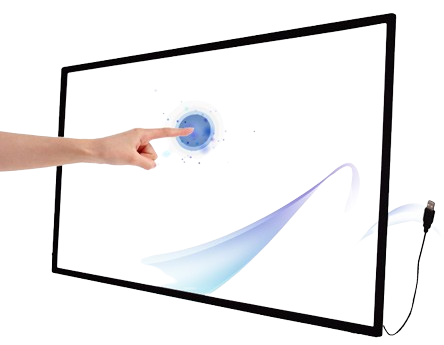
Depending on the environment and operating requirements, we can support both PCAP and resistive touchscreen technologies.
PCAP touchscreens can provide a modern, responsive interface suitable for applications where intuitive touch operation is important.
Resistive touch can still be highly effective where the operating environment, user input method or application requirements make pressure-based touch more appropriate.
Touch solutions can also be customised around the finished product, including:
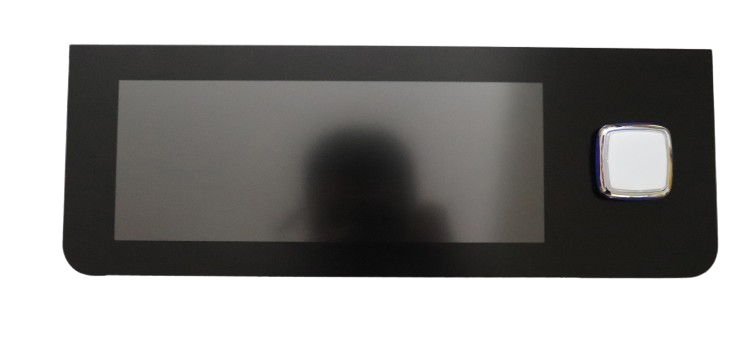
- Custom cover glass
- Printed borders and branding
- Optical bonding
- Mechanical integration
- Touch controller options
- Custom sizes and shapes
This allows the touchscreen to become part of the overall product design rather than simply an additional component.
Display integration is one of the most important considerations in any instrumentation project.
CDS supports a broad range of display interfaces, including:
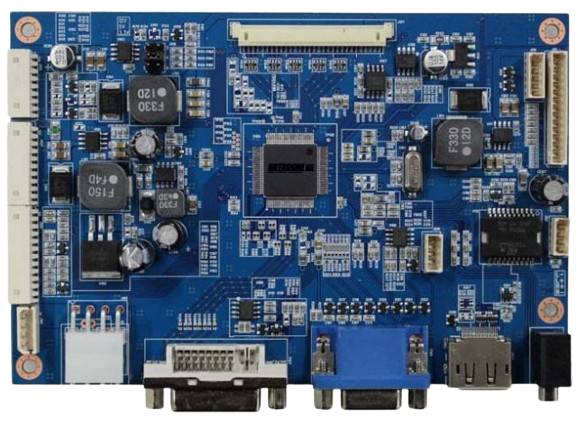
RGB, LVDS, MIPI and SPI interfaces, plus UART Smart solutions using RS232, TTL and RS485.
The most appropriate interface will depend on the host processor, display resolution, data requirements, cable length, system architecture and overall product design.
By considering the display interface early in the project, engineers can reduce integration challenges and avoid unnecessary redesign later in development.
Selecting a display is only one part of the process.
For many instrumentation products, the final display assembly may also require mechanical and optical customisation.
CDS can support customers with options including:
Custom Cover Glass
Cover glass can be designed around the appearance and mechanical requirements of the finished equipment, including custom dimensions, borders and printed areas.
Optical Bonding
Optical bonding can improve the optical performance of a display assembly by reducing internal reflections between the display and cover glass.
This can be particularly useful where improved readability and a more integrated finished appearance are required.
Mechanical Integration
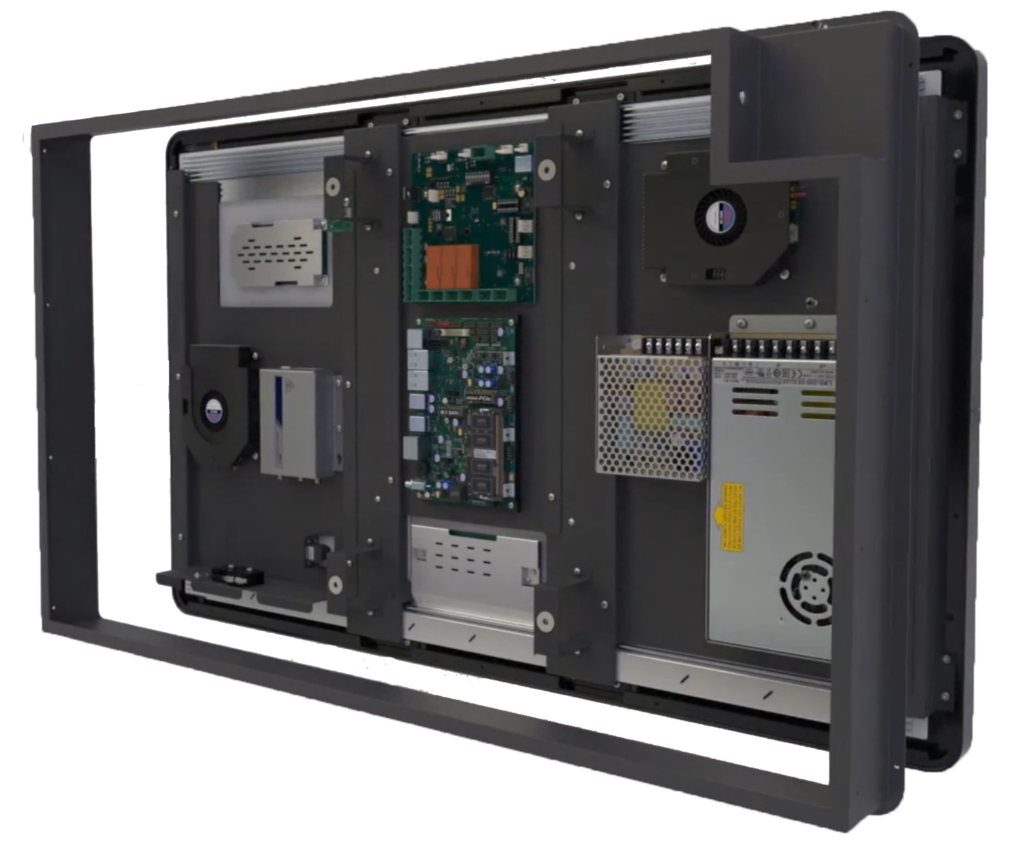
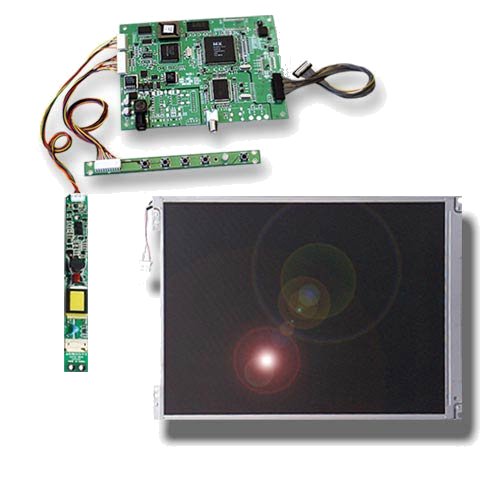
Mechanical considerations such as mounting, dimensions, connectors, flex cables and enclosure integration can all affect the suitability of a display.
Considering these requirements alongside the electrical specification can help produce a more practical and reliable final solution.
Instrumentation displays can operate in environments where reliability and readability are critical.
Depending on the application, display requirements may include:
- High brightness
- Wide viewing angles
- Long-term reliability
- Industrial operating characteristics
- Touch functionality
- Custom mechanical integration
- Long-term supply and support
The correct solution depends on the environment in which the finished product will operate.
Rather than choosing a display purely by size and resolution, engineers should consider how the entire display system will perform within the application.
At CDS, our approach is simple:
We optimise the display for your application.
That may mean selecting an existing standard display, identifying the most appropriate interface, integrating touch functionality or developing a more customised display assembly.
Whether you are starting a new instrumentation project or reviewing an existing display platform, we can help evaluate the display technology, interface, touchscreen, cover glass, optical bonding and mechanical requirements.
Choosing the Right Industrial Instrumentation Display
When specifying a display for instrumentation equipment, engineers should consider several key questions:
- What physical display size is available?
- What information needs to be displayed?
- Is touch functionality required?
- Which electronic interface is compatible with the host system?
- Will the display be used indoors, outdoors or in challenging lighting?
- Does the product require custom cover glass or optical bonding?
- Are there unusual mechanical restrictions?
- What level of long-term supply support is required?
Considering these factors early can make it much easier to identify the most suitable display solution.
From 0.96-inch TFT LCDs and Smart UART displays to stretched bar-type displays, OLEDs and customised touchscreens, Crystal Display Systems offers a wide range of display technologies for industrial instrumentation applications.
If you are developing new instrumentation or looking to improve an existing display system, our team can help identify and optimise a solution around your requirements.
Request a quotation or discuss your application with our team.
Telephone: +44 (0)1634 791600
Email: info@crystal-display.com
Website: crystal-display.com
Need More Information?
CALL US +44 (0)1634 791600